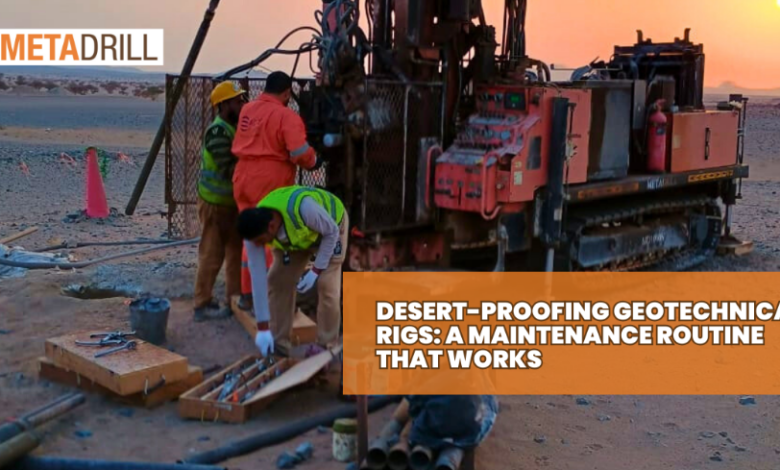
Desert sites do not “slowly” damage a rig. They do it fast. Fine dust sneaks into seals; heat pushes fluids past safe limits, and small leaks turn into full shutdowns when you are far from support. If you want consistent production and clean data, you cannot treat maintenance as something you do only when the rig starts complaining. You need a routine built for desert reality, especially when you run geotechnical drill rigs day after day.
This guide gives a practical maintenance routine that crews can actually follow on site.
Why desert conditions punish drilling rig equipment
In desert work, the two biggest enemies are heat and dust. Heat breaks down oil and weakens the hoses. Dust clogs cooling systems and moving parts. The result is the same: more downtime, more repairs, and more “mystery” faults that show mid shifts.
Typical desert failure triggers
- Radiators and coolers blocked by fine dust
- Hydraulic oil overheating and losing performance
- Air filters choking and reducing engine efficiency
- Worn seals leading to leaks and loss of pressure
- Loose electrical connections from vibration and sand
A routine that targets these points will protect your drilling rig equipment better than any last-minute fix.
Daily checks for geotechnical drill rigs that prevent shutdowns
Daily maintenance is not about doing everything. It is about catching problems before they become expensive.
A simple daily checklist
- Clean radiator fins and coolers with safe air pressure
- Check hydraulic oil level and look for foaming or dark color
- Inspect hoses for rubbing, cracking, and loose clamps
- Drain water separators and check fuel quality
- Confirm air filter restriction indicator and clean housing seals
- Walk around and spot new leaks on the ground or frame
These checks take minutes, but they save hours of downtime.
Weekly inspection using drilling rig tools and equipment
Weekly inspections go deeper. This is where you catch wear that the daily walk around will miss.
Weekly routine you can schedule
- Grease points and check for dry joints or abnormal play
- Inspect rod handling systems for alignment and smooth movement
- Check clamps, chuck jaws, and wear surfaces
- Verify belt tension and fan operation
- Inspect electrical harnesses and connectors for dust ingress
- Test emergencies stop and basic safety interlocks
The goal is to keep drilling rig tools and equipment operating smoothly, so the crew does not start improvising under pressure.
Cooling, hydraulics, and filtration: the desert priority triangle
Most desert downtime comes from three systems. If you prioritize them, uptime improves fast.
Cooling system priorities
- Keep coolers clean and airflow clear
- Monitor temperature trends, not just alarms
- Replace worn fan belts and damaged shrouds early
Hydraulic system priorities
- Use correct oil grade for high temperature operation
- Keep breather filters clean and sealed
- Track pressure drops that signal internal wear
Filtration priorities
- Change air and hydraulic filters based on conditions, not calendar days
- Keep filter seals clean to stop dust bypass
- Store spare filters in sealed packaging on site
When these three systems are stable, performance becomes predictable.
See also: How Long Does Business Account Verification Take? – Get Verified Faster With These Tips!
What modern efficient geotechnical rigs do differently
The advantage of modern efficient geotechnical rigs is not only speed. It is controlled. Many newer rigs provide clearer monitoring, better guarding, and more consistent parameters, which helps crews catch issues earlier.
Where modern rigs help the most
- Better temperature and pressure monitoring
- More stable hydraulic performance under load
- Easier access to service points for faster maintenance
- Cleaner rod handling and reduced manual strain
Even with modern rigs, routine discipline is still required, but the feedback loop is stronger.
A field habit that keeps maintenance human and consistent
The best routine is the one the crew will actually do. Keep it simple and repeatable:
- Assign one person responsible for the checklist per shift
- Use a short log to record issues and actions taken
- Fix small leaks and loose fittings immediately
- Review the log weekly to spot patterns
This makes maintenance predictable instead of being reactive.
Conclusion
Desert proofing works when the routine is consistent, not complicated. With disciplined daily checks and planned weekly inspections, geotechnical drill rigs stay reliable in heat and dust, and your crew avoids the stop start cycle that kills productivity. The key is protecting the basics early, especially drilling rig equipment, so small wear does not turn into a shutdown in the middle of a critical run.